STATISTICS

Pages

REPORTERS WITHOUT BORDERS

REPORTERS WITHOUT BORDERS

Friday, 29 April 2011

Ten people were arrested around the royal wedding route

Ten people were arrested around the royal wedding route on Friday morning as Scotland Yard commissioner Paul Stephenson said his force was prepared for all eventualities.

The arrests took place in and just outside the exclusion zone around Westminster Abbey and Buckingham Palace.

Scotland Yard said two people were arrested for being drunk and disorderly, one for assault, one for possessing an offensive weapon, two for breach of the peace, two for theft.

The biggest security operation in the Metropolitan police's recent history has seen the deployment of 5,000 officers, including a 1,000-strong rapid response team to react to any criminality, direct action or extremist threats inside and outside the exclusion zone.

In pre-emptive action on Wednesday and Thursday officers from the Met raided five squats in London and one in Hove, arresting 21 people.

All were released and bailed with conditions that bar them from the City of Westminster on Friday.

On Thursday night Cambridgeshire police arrested Charlie Veitch, a self confessed anarchist, for conspiracy to cause a public nuisance and breach of the peace.

It is understood police believed Veitch was planning to cause disruption in Soho Square, central London.

Sir Paul Stephenson, the Scotland Yard commissioner, said his force was prepared for every eventuality.

Asked about the raids on the squats, he said the public would expect the police to carry out their job.

US land borders tighten, drug smugglers fly

The visiting British pilots were training near a naval air station one night this month when their helicopter came within about 150 feet of an ultralight plane flying without lights. The ultralight darted away toward Mexico without a trace.

The near-disaster over the Southern California desert was an example of drug smugglers using low-flying aircraft that look like motorized hang gliders to circumvent new fences along the U.S. border with Mexico. The planes, which began appearing in Arizona three years ago, are now turning up in remote parts of California and New Mexico.

And in a new twist, the planes rarely touch the ground. Pilots simply pull levers that drop aluminum bins filled with about 200 pounds of marijuana for drivers who are waiting on the ground with blinking lights or glow-sticks. Within a few minutes, the pilots are back in Mexico.

"It's like dropping a bomb from an aircraft," said Jeffrey Calhoon, chief of the Border Patrol's El Centro sector, which stretches through alfalfa farms, desert scrub and sand dunes in southeast California.

The Border Patrol has erected hundreds of miles of fences and vehicle barriers along the border and added thousands of new agents, so drug smugglers are going over, under and around.

As U.S. authorities tighten their noose on land, ultralights are another tack to smuggle marijuana. The Customs and Border Protection agency counted 228 incursions along the Mexican border in fiscal 2010, up from 118 a year earlier, when it began keeping track. There have been 71 since the start of fiscal 2011 on Oct 1.

The agency counts an incursion when authorities seize an aircraft or nearby drugs, when a trained source spots an aircraft that is correlated by radar, or when enough people see an aircraft to establish a cross-border flight pattern.

Tunnels are another means to circumvent tightened border security. Lined with rail tracks, lighting and ventilation, two were discovered in San Diego in November that netted a combined 50 tons of marijuana on both sides of the border. U.S. authorities found 71 clandestine tunnels since October 2008, more than during the previous six years.

Smugglers also use single-engine wooden boats to ferry bales of marijuana up the Pacific Coast. U.S. authorities seized 47 tons of narcotics off of Southern California shores since October 2008, including 740 pounds this month in an abandoned craft at Dana Point, about 75 miles north of the border.

Under Federal Aviation Administration regulations, ultralights weigh less than 254 pounds, carry just five gallons of fuel and fly at a top speed of 63 mph. They are not designed to carry anything other than a pilot. No pilot's license or certificate is needed, though regulations advise that the aircraft should not be flown over populated areas or in the dark.

But drug pilots often zip along at night just above power lines.

Kevin Kelly of U.S. Immigration and Customs Enforcement was with about a dozen agents looking for ultralights under a full November moon in the desert east of Nogales, Ariz., when he heard what sounded like lawnmower in the sky. The aircraft appeared from the south.

"It's got this big, long wingspan it's almost like Batman," said Kelly, ICE's assistant special agent in charge of investigations in Nogales. "It's almost like a glider with a little guy underneath it piloting it."

Kelly watched the ultralight throttle back, get close to the ground and dump bundles packed in duct tape. The pilot picked up speed and wheeled back toward Mexico.

The agents waited for someone to pick up the load 286 pounds of marijuana but no one came.

Ultralights initially flew as far north as the Phoenix area but they now generally stay within 30 miles of the border, said Matt Allen, special agent in charge of investigations for ICE in Arizona. Their small fuel tanks require pilots who fly far north to either refuel or take apart the aircraft and truck it back to Mexico.

Pilot Jesus Iriarte was arrested in October 2008 after landing an ultralight with 222 pounds of marijuana strapped to the frame in Marana, Ariz. nearly 100 miles north of the border and was sentenced to prison.

"Gone are the days when they could come deep into the U.S. undetected," Allen said. "They really don't want to be on the ground anymore. They're dropping it and flying away ... It makes them less vulnerable."

Authorities are having more success capturing drivers who pick up the drugs.

Last month, Border Patrol agents arrested Sergio Favela near Douglas, Ariz., as he was allegedly loading 220 pounds of pot into his pickup truck around 3 a.m. A complaint filed in federal court in Arizona says Favela, a U.S. citizen who was captured after a short foot chase, told authorities he was to be paid $1,500.

Heightened enforcement in Arizona appears to be pushing smugglers to California and New Mexico, some authorities say. In California, authorities have confirmed 30 ultralight incursions since December in Imperial County, a remote farming region with easy access to highways, and another six in the San Diego area. The flights were previously almost unknown in California.

The Border Patrol recently began encouraging agents in Imperial County to spend more time outside their vehicles because it is difficult to hear the aircraft over the hum of engines and air conditioners. The planes fly over farms and desert scrub near Calexico, a border town of about 40,000 residents. One pilot who recently eluded capture dropped a load of pot in a warehouse lot in city limits.

Until fences and vehicle barriers were erected, drug smugglers blended in with off-road vehicle enthusiasts in the Imperial Sand Dunes, used as a film location for "Star Wars: Return of the Jedi." Drug-laden Suburbans and Tahoes barreled through the desert scrub.

Drive-through smuggling attempts nearly stopped after fencing went up in 2008 and 2009. The number of drive-thrus in the Border Patrol's El Centro sector fell to six in fiscal 2010 from 340 in 2008.

That means smugglers are turning to tunnels and ultralights, Imperial County Sheriff Ray Loera told Congress this month.

"The problem now is that, as Clint Eastwood said, they adapt and overcome," he told lawmakers.

Still, the amount of pot being ferried on the ultralights pales compared to the multi-ton shipments through tunnels or the volume of seizures from secret vehicle compartments at border crossings every day, causing some authorities to wonder why drug traffickers would go to the trouble. In Imperial County, 10 seizures from ultralights drops since December have netted a relatively modest 3,090 pounds of marijuana.

"It makes you wonder how much they're really making off of this venture," said William Mataya, a group supervisor for ICE who belongs to an informal group of law enforcement officials in Imperial County that began meeting recently to swap intelligence on ultralights. "They're really not bringing a lot each time."

The risks can be fatal. A pilot died in November 2008 when his ultralight strapped with more than 140 pounds of marijuana crashed in a lettuce field in San Luis, Ariz. Another pilot who crashed in Arizona was paralyzed from the waist down.

Ultralights flying low are difficult to see on radars at March Air Force Base in Riverside, where CBP monitors air traffic along the entire border. That means relying on Border Patrol agents and sheriff deputies to be alert for the sound of unusual motors. They almost always get there too late to find the pilot of the planes, which cost $5,000 to $20,000.

"Either we get there and it's headed back, or it could already be back there," said Tim Jennings, who heads the Drug Enforcement Administration's Imperial County office.


Thursday, 28 April 2011

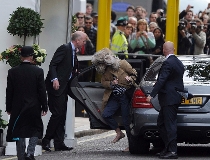
Less than 24 hours before the royal wedding, and outside the Goring Hotel - the last place Kate Middleton will sleep as a single woman - onlookers and the press pushed

Give a girl a break.
Less than 24 hours before the royal wedding, and outside the Goring Hotel - the last place Kate Middleton will sleep as a single woman - onlookers and the press pushed Thursday against metal barriers and strained their eyes.
Anticipation showed as a car pulled up, and a woman hidden under a funky hat rushed inside.
Everyone settled back, as it appeared not to be the bride of the century.
Give or take a pupil, more than 2-billion sets of eyeballs could be following Middleton down the aisle when she marries Prince William inside Westminster Abbey Friday.
But at this stage, as a woman prepares to marry a man, there is an awkward sense of pre-event stalking.
I can tell you what the bathroom looks like in her room.
People here talk about the energy drinks she's supposedly consuming to keep up her stamina.
And at least one local tabloid has written that Middleton wakes up in a cold sweat many nights, after dreaming she suddenly realizes she's naked in front of the congregation on her wedding day.
But if that's true - and I doubt it is - it would only make perfect sense.
William has it tough, as he's photographed even trying to play a game of British football with his friends at a London park this week.
But it's Middleton who can't step into the light these days and hours, without being sized up and judged - from her weight to how she wears her hair.
On Thursday, away from the crowds of the Goring Hotel, Canadian friends Isabell Mackay and Cathy Sheppard, hairdressers from Sarnia, Ont., waded through the humanity outside the Abbey.
With the Canadian flag proudly stamped on their clothes and hats, the women joined other revellers in a sense of occasion and fun.
The sun shone and drew hope the rain may stay away on Friday.
People prepared well-wishing signs and drank tea and shared biscuits with reporters who've become their new best friends.
"When else at our age (though she wouldn't divulge it) would we ever get the chance to see the wedding of the century?" said Mackay.
I can tell you about the millions of pounds spent on perfection to make it live up to that billing.
And about a dream gown that's still a mystery.
And fully grown trees brought inside a church to create the perfect environment.
But being the primary focus of the 'wedding of the century' - with crowds feeding in from the four corners of London, 5,000 police officers called in to keep control, the media drum-rolls becoming deafening and speculation about what you're dreaming about - would seem to be a rite royal pain.

Watching the nuptials of Prince William and Kate Middleton across the pond? You'll be up early.


If you're cooking your scones right now to prepare for your viewing party, here's a handy printout if you live on either coast. Add an hour to PST if you live in Mountain Time, and subtract an hour from EST if you live in Central Time. We can't please everyone, you know.

Between 3:15 am and 4:45 am EST, 12:15 am and 1:45 am PST:  The general congregation will arrive at the Great North Door of Westminster Abbey.

From 3:50 am EST, 12:50 am PST:  Governors-General and Prime Ministers of Realm Countries,the Diplomatic Corps, and other distinguished guests arrive at the Abbey. Victoria Beckham is among the wedding's high-profile guests, but it's unclear if she is considered "distinguished."

5:10 am EST, 2:10 am PST: Prince William and Prince Harry leave Clarence House for Westminster Abbey.  They arrive at the Abbey at 5:15 am EST, 2:15 am PST.

5:20 am EST, 2:20 am PST: Members of foreign royal families—including Crown Princess Victoria of Sweden and Prince Seeiso Bereng Seeiso of Lesotho—arrive at Westminster Abbey. A quick glance at TIME's picture gallery of the world's most stunning tiaras should help you pick out a few of them queens.

5:20 am EST, 2:20 am PST: Kate's mother Carole Middleton and her brother James leave the Goring Hotel.  They arrive at the Abbey at precisely 5:27 am EST, 2:27 am PST.

(More on TIME.com: See the TIME photo essay: "Kate & Wills: A Royal Courtship")

5:25 am EST, 2:25 am PST: Lesser known members of the royal family, including Lady Amelia Windsor (29th in line to the throne) depart for the Abbey. They arrive at 5:30 am EST, 2:30 am PST.

5:35 am EST, 2:35 am PST: The members of the royal family who you might actually recognize depart.  They arrive at the Abbey at 5:40 am EST, 2:35 am PST, and include Princess Anne, Prince Andrew, Princess Eugenie, Princess Beatrice, and Prince Edward.

5:38 am EST, 2:38 am PST: The Prince of Wales and The Duchess of Cornwall leave Clarence House. They arrive at the Abbey at 5:42 am EST, 2:38 am PST, assuming they avoid a repeat of the riot mob attack on their Rolls Royce that slowed them down last December.

5:40 am EST, 2:40 am PST: The Queen and The Duke of Edinburgh leave Buckingham Palace for Westminster Abbey.  They arrive at 5:45 am EST, 2:45 am PST.

5:48 am EST, 2:48 am PST: The bridesmaids and pages leave the Goring Hotel for Westminster Abbey.  They arrive at 5:55 am EST, 2:55 am PST.

(More on TIME.com: See pictures of royal weddings through history)

5:51 am EST, 2:51 am PST: Kate Middleton and her father Michael leave the Goring Hotel for Westminster Abbey.

6:00 am EST, 3:00 am PST: The service begins.

7:15 am EST, 4:15 am PST: The Carriage Procession of the Bride and Bridegroom with a Captain's Escort of the Household Cavalry, followed by The Queen's Procession with a Sovereign's Escort of the Household Cavalry, leaves Westminster Abbey for Buckingham Palace.

7:30 am EST, 4:30 am PST: Kate and William arrive at Buckingham Palace.

7:40 am EST, 4:40 am PST: Members of the royal family and members of foreign royal families arrive at Buckingham Palace.

From 7:40 am EST, 4:40 am PST: Other guests for the reception arrive at Buckingham Palace.

8:25 am EST, 5:25 am PST:  Kate and William, and their families, appear on the balcony. The bride and groom stage their much-anticipated kiss.

8:30 am EST, 5:30 am PST:  The Royal Air Force and the Battle of Britain Memorial Flight fly by.

(More on TIME.com: Read about Kate Middleton's lunch buffet at the royal wedding)

Paris Mayor Bertrand Delanoe has urged an end to the "shocking" arrest of dozens of mainly Tunisian migrants in France as detentions continue.


Sixty suspected illegal migrants were rounded up in the French capital on Wednesday and 15 have been detained in the southern city of Marseille.

Hundreds of young Tunisian men are sleeping rough in parks around Paris.

Most reached France via Italy, where thousands have arrived by boat this year amid unrest in the Arab world.

French President Nicolas Sarkozy and Italian Prime Minister Silvio Berlusconi have called for a revision of the Schengen treaty, which allows people to move between many European countries without border checks.

France is seen as a likely destination for migrants from Tunisia because many of them speak the French language.

The French government was angered by Italy's decision to grant visas to thousands of migrants, allowing them to travel across the Schengen zone.

'Undignified' arrests
Police in Marseille arrested 15 Tunisian migrants who had mostly arrived from Italy and were staying in a square near the central railway station, police and human rights activists told AFP news agency.


I like to stay here in France but now I have problem for the police - maybe I go to Holland or maybe London, I don't know where”

Unnamed Tunisian migrant in Paris
They were picked up between 2100 (1900 GMT) and midnight on Wednesday as local aid workers were trying to find them a bed for the night.

Bernard Eynaud, of the Federation for Human Rights, said riot police and frontier police had moved in to check the migrants' residence permits.

He said the arrests seemed "very hard" just when the local authorities had announced that migrants would be housed in a school.

Between 100 and 200 migrants have been staying in the square for several days.

In Paris, Mayor Delanoe, a member of the opposition Socialist Party, said the state should stop its "undignified" police operations and set in motion "solutions more in keeping with international law and respect for human dignity".

However, a fellow Socialist and potential presidential candidate, Manuel Valls, said that while the migrants were living in difficult conditions, he was "not shocked by the fact that illegal migrants [were] escorted back to the frontier".

Plan to buy old U-boats sparks signs of conflict

Signs of conflict have emerged over the navy's 7.7-billion-baht plan to procure second-hand German submarines as a top aide to the defence minister has insisted the procurement plan has yet to be approved.

"The Defence Council didn't approve the submarine purchase, only acknowledged it," Noppadon Inthapanya, secretary to Defence Minister Prawit Wongsuwon, said yesterday.

On Monday, navy commander Kamthorn Phumhiran spent almost two hours outlining the plan to buy six second-hand U-206 A submarines worth 7.7 billion baht to the Defence Council.

Council spokesman Col Thanatip Sawangsaeng said at that time council members, who include the defence permanent secretary and supreme commander, were satisfied with the procurement plan.

Gen Noppadon said yesterday with only one cabinet meeting left before a House dissolution, the procurement is unlikely to be approved by the current administration.

"I think it will be quite difficult for the defence minister to bring the matter before the cabinet meeting next week [May 3]," he said.

Gen Prawit left for China yesterday on a visit scheduled to last until Saturday. He will reportedly also look at Chinese submarines.

Earlier Gen Prawit raised the idea of buying South Korean-made submarines as an alternative for the navy because they are new.

Gen Noppadon, however, denied speculation that the defence minister wanted to buy submarines from South Korea, saying weapons procurement would be at the request of each force.

He said there were several steps involved in any weapons purchase plans so it was impossible to say the submarine scheme would be approved by the cabinet before the House is dissolved. Such plans have to be screened by the Royal Thai Armed Forces Headquarters, the Office of the Permanent Secretary and the Budget Bureau, among others.

Gen Noppadon said the consideration process may take time, but that is to ensure transparency and accountability.

"I, on behalf of the defence minister's secretary, can't allow any matter where doubts remain over transparency to be passed on.

"What we have to consider is whether the navy needs the submarines, how much budget is available, and decide if new or old ones should be procured," he said.

He said if the submarine scheme is approved, he would be responsible for answering questions from the media.

The submarine procurement matter has yet to arrive at the office of defence minister, he said.

Meanwhile, a highly placed source at the Defence Ministry said yesterday the submarine plan has been considered by the Royal Thai Armed Forces Headquarters and the Office of the Permanent Secretary.


Tuesday, 26 April 2011

U.S. fears overdue 'megathrust' earthquake will trigger tsunami and decimate unprepared cities on north-west coast

The north-west coast of the U.S. could be devastated by a huge movement of undersea plates known as a ‘megathrust’ earthquake, scientists say.

A review of the dangers posed by the Juan de Fuca plate released in the wake of the Japanese quake has raised fears that the Pacific seaboard could be similarly ravaged.

The horrifying possibilities have been brought to light by data researched by the Active Tectonics and Seafloor Mapping Laboratory at Oregon State University.

And the results are shown in a documentary, Megaquake: The Hour That Shook Japan, which is set to go out on the Discovery Channel in the UK this weekend.


Monday, 25 April 2011

A man acting as a "human cannonball" has been killed in an accident at a stunt show in Kent.


Police said a safety net gave way during the stunt at the Kent County Showground at Detling.

The man, 23, had been taken to Maidstone Hospital by air ambulance with multiple head and back injuries.

The accident happened at about 1530 BST in a performance by Scott May's Daredevil Stunt Show. A second show due to start at 1930 BST was cancelled.

A statement on the Scott May website states: "With our apologies, due to unforeseen circumstances all shows have been cancelled until further notice."

Insp Tony Ball of Kent Police said the safety net gave way during the stunt in front of crowds at the show.

He said Kent Police were investigating, the Health and Safety executive have been informed and Maidstone Borough Council would also be involved.

A police spokesman said the dead man's next-of-kin had been informed but he had not been formally identified.

Scott May's show has been touring in the UK since 1991 in a season which runs from March to September.

As well as the human cannonball stunt, the show also includes pyrotechnics, motorcycle jumps and monster trucks.

Parakeets living wild in Britain could be culled because they pose a threat to native wildlife and are damaging food crops.


The green, yellow and grey birds are originally from South America but are living wild in the south of England after being released from captivity in the 90s.

But conservationists have called on the animals to be rehomed rather than shot.

Only 100 to 150 of the 30cm tall bird live in the UK, mainly in the Home Counties, but the decision has been taken to exterminate them.

A spokesman for the Department for Environment, Food and Rural Affairs said: 'Control work is being carried out as part of a Defra initiative to counter the potential threat monk parakeets pose to critical national infrastructure, crops and native British wildlife.

'This invasive species has caused significant damage in other countries through nesting and feeding activity and we are taking action now to prevent this happening in the UK.'

But a spokesman for the Royal Society for the Protection of Birds told the Daily Telegraph: 'They (parakeets) have the potential to expand rapidly and could pose a threat to agriculture and public safety because of the nests causing structural problems to the electricity supply.

'But we do not believe they should be shot.'

Sunday, 24 April 2011

British citizens are being urged to leave Syria unless they have a "pressing need to remain" there, following weeks of unrest.


The Foreign Office "strongly advises" Britons to leave because of the "rapid deterioration" in law and order.

It says the British Embassy may not be able to provide normal consular assistance if the situation worsens.

At least 100 people have died in the last two days of protests against the rule of President Bashar al-Assad.

'Better way'
The Foreign Office advised British nationals to leave the country while commercial airlines were still flying.

Earlier this week, the UK advised Britons to consider leaving Syria but has now stepped up the warning. It also advises against all travel to the country.

The Foreign Office is urging Britons in Syria to register with the internet-based LOCATE system, which allows embassies to keep track of citizens in the country in case of emergency - so far about 500 people have done so.

Foreign Secretary William Hague told the BBC's Andrew Marr Show he was concerned that, if the turmoil continued, Britons might not be able to get out of Syria "at all".
William Hague: 'I am very worried about the rapid deterioration of the situation'
He said the Syrian government had provided "inadequate reaction" in terms of democratic reforms and "over-reaction" in terms of their repression of protests.

"I hope we can persuade them that there is a better way than what they are doing now," he said.

A crackdown on Syrian protesters on Friday, which came a day after Mr Assad scrapped decades of emergency rule, drew strong international condemnation.

Nearly 300 people have reportedly died in weeks of unrest against the government of Mr Assad, who took over after the death of his father, Hafez al-Assad, in 2000.

Saturday, 23 April 2011

Indonesia on 'highest alert' through Easter

Indonesia is on high alert for the holiest period on the Christian calendar after police found a bomb near a church in a Jakarta suburb.
The device was found in in a gas pipeline about 100 meters from the Christ Cathedral, a Catholic church in Tangerang, just outside the capital, authorities said.
"Starting tonight until the day after Easter, the military and the police will be on the highest alert at all places," Coordinating Minster for Security Joko Suyanto told reporters.
Indonesia is a predominantly Muslim nation but other religious minorities, such as Christians and Hindus, are also there, and the government has been vigilant over the threat of sectarian violence.
Security will be beefed up around houses of worship, tourist destinations, embassies, and sites visited by foreigners, officials said.
Police also arrested 19 terror suspects in connection with the church bomb and/or attempted mail bomb attacks last month.
Two security officials and a police detective were injured while attempting to defuse one of the mail bombs, said Boy Rafli Amar, the national police spokesman.
The explosives were packed as fake books and sent to four targets, including a moderate Muslim scholar and a human rights activist, officials said.
Indonesia has been on edge after last month's parcel bombs and the Friday suicide bombing in a mosque in Cirebon, West Java.
The attacks are an example of a new shift in terror attacks in the nation, the International Crisis Group said.
Attackers are now coming from small independent groups instead of the larger established terror groups such as Jamaat Tawhid Anshoru or Jemaah Islamiyah, the crisis group said in a report this week.
"The emergence of these small groups undertaking jihad on their own highlights the urgent need for prevention programs -- which are virtually nonexistent in Indonesia," said Sidney Jones, a senior adviser with the group.
Friday's suicide attack in a mosque inside a police station in Cirebon killed the bomber and wounded dozens of others, police said.


British woman dies after she was dropped into frigid Norwegian Sea in cruise ship rescue

73-year-old British woman who was accidentally dropped into the Norwegian Sea as rescue workers took her off a cruise ship late last month has died at a hospital in England.
Janet Richardson fell ill while on a Scandinavian cruise and was being transferred to a rescue boat on March 29 when coast guard officers let her stretcher drop into the sea.
The woman spent four minutes treading water. The sea was just a few degrees above freezing at the time.
North Cumbria University Hospitals in England said in a statement Saturday that Richardson died Thursday after spending a week in intensive care.
Officials said Richardson began suffering from internal bleeding during the homeward leg of a two-week cruise on the Ocean Countess ship.


Friday, 22 April 2011

Libyan National Transitional Council (NTC) accusing Algeria of supporting Colonel Muammar Gaddafi by sending mercenaries.

Algerian Minister of Foreign Affairs has made Friday on the radio the "clearest denials" to the charges of the Libyan National Transitional Council (NTC) accusing Algeria of supporting Colonel Muammar Gaddafi by sending mercenaries.

   "We made the clearest denied to these charges which we consider tactics, based on agendas that have nothing to do with the Libyan case," said the minister on the radio.
   These charges are significantly older than the crisis in Libya, it is very clear," said Medelci without elaborating.
   The Algerian press has said in recent weeks that the charges of the NTC are actually inspired by Morocco, rival of Algeria in North Africa.
   The two countries maintain persistent differences over Western Sahara which blocked the construction of the Arab Maghreb Union (AMU), launched in 1989 and counts Tunisia and Mauritania as well as Algeria, Libya and Morocco.

Nearly 300 gipsies have been evacuated out of a remote Hungarian village where a three-day, far-Right “training camp” has been set up.

The gipsies, fled Gyongyospata, 50 miles from Budapest, after members of Vendro, a paramilitary group arrived .
The Hungarian Red Cross said it was the first time it had evacuated Hungarian civilians threatened by paramilitary activity since the Second World War. The far-Right Jobbik party won 17 per cent of the vote in a general election in the country last year.
Some 277 women and children were moved out in a convoy of busses Janos Farkos, deputy leader of the Hungarian Roma Rights Organisation, said that the village’s Roma population had felt “terrorised” by the presence of the far-right activists.
“The children had to be sent away this weekend because they wouldn’t be able to sleep at night,” Mr Farkos said.
Vendro’s website said it expected “all those who loved their country and wanted to learn basic self-defence and military training” to attend.


Thailand and Cambodia exchanged gunfire along their border on Friday

Thailand and Cambodia exchanged gunfire along their border on Friday, with each side blaming the other for firing the first salvo. Thailand said three of its soldiers were killed, while Cambodia spoke of unspecified casualties on its side. Bangkok said many Thai soldiers were also injured in the “unprovoked firing”.

The new flare-up was widely seen as a fresh reminder of the long-simmering tensions between the two countries over their competing claims to a piece of territory near the Preah Vihear temple. The International Court of Justice had awarded the Hindu temple to Cambodia in 1962.

The current round of tensions is often traced to the fact that the temple was declared a world heritage site a few years ago. However, both countries indicated that Friday's hostilities occurred near a different temple site, with Phnom Penh informing the United Nations Security Council that Thai troops directed artillery fire towards two temples located deep inside the Cambodian territory.

In Bangkok's version, some Cambodian soldiers were first found to have intruded into Thai territory and started building a bunker. Upon this being noticed, Cambodian troops opened fire, it was said.

Disputing the Thai version, Cambodian Deputy Prime Minister Hor Namhong wrote to Indonesian Foreign Minister Marty Natalegawa as well, complaining about Thailand's “large-scale attack.” Thailand suggested bilateral talks with Cambodia to resolve the tensions. But Phnom Penh asked for a mediated settlement, arguing that Bangkok's proposal was “a pretext for the use of [Thailand's] larger and materially more sophisticated armed forces against Cambodia”. Already, an earlier idea of stationing Indonesian military observers along the Thai-Cambodian border did not take off.

Police in France have discovered a car belonging to a man suspected of killing his wife and four children.


Five bodies have been found buried at the family home in the western city of Nantes but the car was discovered miles away along the Riviera.

The family went missing earlier this month. Parents Xavier and Agnes Dupont de Ligonnes had said the family was moving to Australia.

Autopsies on the bodies, found under a patio, were to take place on Friday.

Nantes prosecutor Xavier Ronsin said late on Thursday that the five had probably died of gunshot wounds.

Police said the car had been found in a hotel car park in the town of Roquebrune-sur-Argens, in southeastern France, after bank withdrawals showed Mr Dupont was in the area.

'Rambling messages'

Police found the missing car, a metallic blue Citroen C5, outside a hotel where he is now thought to have stayed on 14 April.

Businessman Xavier Dupont and his wife Agnes Dupont de Ligonnes, 49, and their four children - Arthur, 21, Tomas, 18, Anne, 16 and 13-year-old Benoit - disappeared on 3 or 4 April 2011.


The family home where the bodies were found was in central Nantes
Before the disappearance, the family left "rambling and contradictory" messages, saying they were taking their two younger children out of school because they were emigrating to Australia.

The father had also contacted people explaining that he was a secret agent who was leaving as part of a witness protection programme.

No trace of a struggle or violence has been found at the house, where the wardrobes had been emptied. There was also a note taped to the letter box at the house reading: "Return all mail to sender."

According to AFP news agency, Mr Dupont bought hessian sacks and cement before his disappearance.

Local people described the family as quiet and respectable middle-class Catholics with no history of odd or criminal behaviour.

The couple were originally from the wealthy Paris suburb of Versailles but had moved to a townhouse on a central boulevard in Nantes.

He sold advertising space while she volunteered for church activities and taught the Catholic catechism to school children.

The younger children were attending a private high school.

The headmaster said that after being informed that the family were leaving for Australia, he had received a cheque covering the fees for the entire remainder of the school year.

Thursday, 21 April 2011

PENSIONER Janet Richardson struggles to stay afloat after plunging into the icy North Sea during a bungled rescue from a cruise ship.


The gran, 73, spent four minutes trying to stay afloat in sub-zero water as she was being evacuated from the Ocean Countess after a trip to see the Northern Lights.

Janet, from Cumbria, had fallen seriously ill with internal bleeding and was being transferred by Norwegian authorities when the two ships moved apart.


She was eventually hauled back on to the lifeboat and taken to Bodo, north of the Arctic Circle, where she stopped breathing and needed mouth-to-mouth resuscitation. She was airlifted to Cumberland Hospital in Carlisle and last night was in intensive care.

Husband George, 78, said: “When they tried to move her on to the lifeboat the ship was still moving.

“They tried to keep the lifeboat close to the side but suddenly its rear end moved away from the main ship.

“There were six men on the stretcher but it went down and then Janet slipped into the sea. It was traumatic to see her fall. I thought I was going to lose her.”

Cruise and Maritime Voyages, which operates the service, has launched a probe into the incident on March 29.

Wednesday, 20 April 2011

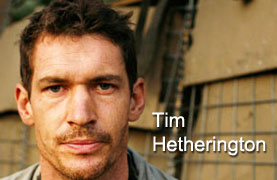
Tim Hetherington, who had dual UK and US nationality, is said to have died in a mortar attack.

British photographer has been killed while covering the conflict in the besieged Libyan city of Misrata.

Liverpool-born

Mr Hetherington, 41, co-directed the Oscar-nominated documentary Restrepo, about US troops in Afghanistan.

He worked for Vanity Fair magazine, which said he was "widely respected by his peers for his bravery and camaraderie".

In a recent entry on Twitter, Mr Hetherington described "indiscriminate shelling" by pro-Gaddafi forces.

Two other journalists are said to have been injured in the attack. Doctors in Misrata have told the BBC that one of them is another another British journalist.

They earlier said a second journalist had been killed but this has not been confirmed.

The journalists were among a group who became caught up in mortar fire on Tripoli Street, the main road leading into the centre of Misrata.

Libyan government forces have battled rebels in the city since late February and an estimated 300 civilians have died.

The city's hospital said six people had been killed and 60 injured so far on Wednesday.

Meanwhile, the UN has said the reported use of cluster munitions by Col Gaddafi's forces in Misrata "could amount to international crimes".

Continue reading the main story

Start Quote

It really is a very tragic death for a giant in the field of war photography”


It comes as France and Italy said they would send small teams of military officers to advise Libyan rebels following a similar commitment by the UK.

The Foreign Office confirmed Mr Hetherington's death and said it was offering consular assistance to Mr Hetherington's family.

Mr Hetherington studied Literature at Oxford University and is reported to have recently married.

The New York-based journalist was best known for his work in Afghanistan, and the film Restrepo followed US troops on an outpost in the country. He won the World Press Photo of the Year Award in 2007.

The US-based Committee for the Protection of Journalists said two other journalists had been killed in the Libyan conflict which was "proving to be an extremely dangerous story".

Its director Robert Mahoney said: "We're shocked and saddened by word that our colleague Tim Hetherington has died, and we extend our deepest condolences to his family and colleagues."

France will to trim the number of legal migrants by 10 percent per year

France will to trim the number of legal migrants by 10 percent per year to 180,000 in part to cope with flows of illegal migrants from the southern Mediterranean neighbors, Interior Minister Claude Gueant said on Monday."My target is to reduce (legal migrants) by 20,000 from 200, 000 to 180,000 as the first step," Claude Gueant told the private television channel TF1.

Twenty-four percent of non-European foreigners who are in France are unemployed, which is almost twice the national unemployment rate, the minister added.

Gueant said the integration process has failed and France needs to "fight against illegal migration and to regulate legal migration."

According to figures of the High Council for Integration (HCI), 11.5 million immigrants or children of immigrants live in France, representing 19 percent of the country's 65 million population.

The French decision came as it was unhappy with its neighbor's immigration policies. Italy, which has witnessed massive flows of illegal migrants amid unrest in North Africa, decided to offer them with a three-month visa allowing a free move across the European bloc.

"It's a bit easy for Italy to be generous (...) with the territory of others", Christian Estrosi, Nice mayor told RTL radio when commenting on this temporary visa policy.

France stopped on Sunday between 11:00 and 19:00 local time certain rail traffic from Italy to stop a train carrying illegal immigrants who "sought simply to get round Schengen rules" from Genoa, Venice and other major Italy cities, Estrosi, the former industry minister said.

According to the ex-minister, France, Italy and Tunisia discussed measures to enable Tunisian authorities to further control its coast.

Reports said Italian authorities have arrested since January more than 25,000 illegal migrants. Mostly of them were Tunisians who run from the unrest and economic instability in their homeland.

Generally, thousands of Africans try to reach Europe via Italy, Spain or Malta, the three countries most migrants see as heir preferred entry point into Europe. They set sail in small and rickety boasts seeking for better life but unfortunately, many lost their lives in the sea.

Twelve banks worldwide sued for manipulating Libor

European asset manager has sued one dozen U.S., European and Japanese banks, accusing them of conspiring to manipulate Libor, a benchmark used to set interest rates on hundreds of trillions of dollars of securities.

Vienna-based FTC Capital GmbH and two funds it operates in Luxembourg and Gibraltar accused the banks of conspiring to artificially depress Libor, and limit trade in Libor-based derivatives from 2006 to 2009.

The defendant banks include Bank of America Corp, Barclays Plc, Citigroup Inc, Credit Suisse Group AG, Deutsche Bank AG, HSBC Holdings Plc, JPMorgan Chase & Co, Lloyds Banking Group Plc, Norinchukin Bank, Royal Bank of Scotland Group Plc, UBS AG and WestLB AG.

Libor, whose full name is the London Interbank Offered Rate, is a measure for rates that banks charge each other, and is used worldwide as a short-term rate benchmark.

About $350 trillion of derivatives and other financial products are based on Libor. Small changes in the rate can have large impacts on the amounts of interest that can be charged.

FTC said the 12 banks colluded to suppress Libor to make them appear healthier than they were, and take advantage of trading opportunities not available to outside investors.

"During the most significant financial crisis since the Great Depression, U.S. dollar Libor rates submitted by contributor banks did not vary markedly, nor did they increase or decrease sharply," FTC said in its complaint filed Monday in the federal court in Manhattan.

"In a market not artificially suppressed, Libor rates should have increased significantly during this period," FTC added. "In addition, because different banks were experiencing different levels of severe stress, the banks should have been receiving markedly different borrowing rates."

Citigroup spokeswoman Danielle Romero-Apsilos said: "The lawsuit is without merit." Bank of America spokesman Lawrence Grayson, Credit Suisse spokesman Steven Vames, JPMorgan spokeswoman Jennifer Zuccarelli and Lloyds spokeswoman Sarah Swailes declined to comment.

Representatives of the remaining banks declined to make an immediate comment or could not immediately be reached for a comment.

U.S., British and Japanese regulators are examining whether major banks understated Libor to reduce their borrowing costs and the potential for investor panic, a person familiar with the matter said last month.


Related Posts Plugin for WordPress, Blogger...
Twitter Delicious Facebook Digg Stumbleupon Favorites More