STATISTICS

Pages

REPORTERS WITHOUT BORDERS

REPORTERS WITHOUT BORDERS

Wednesday, 29 June 2011

Wildfire edges closer to US nuke lab

LOS ALAMOS: A wildfire near the desert birthplace of the atomic bomb advanced on the Los Alamos laboratory and thousands of outdoor drums of plutonium-contaminated waste as authorities stepped up efforts to protect the site and monitor the air for radiation.

Officials at the premier US nuclear-weapons lab gave assurances that dangerous materials were safely stored and capable of withstanding flames from the 95-square-mile fire, which at one point was as close as 50 feet from the grounds.

Residents downwind are worried about the potential of a radioactive smoke plume if the flames reach thousands of barrels of waste stored in above-ground tents.

"If it gets to this contamination, it's over — not just for Los Alamos, but for Santa Fe and all of us in between," said Mai Ting, a resident who lives in the valley below the desert mesas that are home to the Los Alamos National Laboratory.

Chris Valvarde, a resident of the Santa Clara Pueblo about 10 miles north of Los Alamos, questioned officials at a briefing Tuesday evening, asking whether they had evacuation plans for his community. Los Alamos, a town of 11,000, already sits empty after its residents were evacuated ahead of the blaze, which started Sunday.

"I know it's the worse scenario to think of," Valverde said. "But when the radiation leaks, are we prepared to get 2,000 people out?"


Forty-eight-year-old Garry Robb, who escaped to northern Cyprus after being released on bail for drug dealing in the UK in 1996, will be re-arrested and deported to Cyprus on July 13

BRITISH criminal currently serving a prison sentence for drug dealing in the UK will soon be extradited to Cyprus to face accusations of developing and trading in Greek Cypriot properties in the north, the British Crown Prosecution Service (CPS) confirmed yesterday.
It will be the first time the Cyprus government has brought a case in Cyprus against an individual for the illegal development of Greek Cypriot property in the north.
Forty-eight-year-old Garry Robb, who escaped to northern Cyprus after being released on bail for drug dealing in the UK in 1996, will be re-arrested and deported to Cyprus on July 13 - immediately after he is released from jail in Britain, the CPS told the Cyprus Mail. After 13 years of hiding out in the north, Robb was sentenced to five years when recaptured in January 2009, but will be released on parole next month.
Before his recapture by British police in 2009, Robb established AGA Developments, a property development company that allegedly lured hundreds of unsuspecting Britons into investing in villas and apartments built on Greek Cypriot-owned land in the north. British police believe around 400 Britons collectively lost in the region of 35 million UK pounds in deals with Robb’s AGA Developments. AGA’s notorious Amaranta Valley project located close to the north coastal village of Klepini still consists of 500 rapidly decaying half-built properties.
According to information provided by the CPS yesterday, the European Arrest Warrant (EAW) charges Robb with nine offences and states that “between 2004 and 2005, the defendant conspired with others (named as Tuncel Tahir Soycan and Akan Kursat Talat) to develop land which did not belong to them, and to sell villas built without permission upon that land by means of false representations to the prospective purchasers”.
All cases against Robb refer to properties he sought to develop in the Kyrenia district and “concern the fraudulent sale or offering for sale of villas on the illegally-developed plots of land”.
Two other charges cited in the EAW accuse Robb and his compatriots of conspiracy to commit a felony and conspiracy to commit a misdemeanour. All the alleged offences are believed to have occurred between April 2004 and April 2005.
If Robb does appear in a Cyprus court, Greek Cypriot judges will not however be focusing on the losses of unsuspecting Britons, but on the losses of the Greek Cypriot landowners whose properties he dealt in.
As Greek Cypriot lawyer Constantis Candouna told the Cyprus Mail yesterday, “It is the Greek Cypriot refugees who are the victims. For the Brits, it was as if they were buying stuff off the back of a lorry”. He advised Britons who had been cheated by Robb to apply to courts in the UK or the north.
European arrest warrants for Robb and his two AGA associates Tahir Soycan and Akan Kursat were first issued in 2005 by a Nicosia court amid allegations the three were trading in illegally acquired Greek Cypriot properties in the north. Turkish Cypriot police however did not act on the warrants because the territory remains outside EU jurisdiction, and because its authority did not view Robb’s selling of Greek Cypriot property a crime. Britain, it seems, has waited for Robb to serve his sentence for drug dealing before deciding to enact the EAW.

Six of the UK's most wanted men are suspected of being on the run in the Netherlands.


The men - three of whom are from Liverpool - are believed to be in and around Amsterdam.

An appeal to trace them has been launched by Crimestoppers with the Serious Organised Crime Agency (SOCA).

Paul Finnigan, 22, and Mark Fitzgibbon, 40, are accused of being in involved in supplying drugs. Mark McKenna, 39, absconded from Subdbury prison in 2008.

He was serving a 15-year sentence for conspiracy to supply class A drugs.

Mr Finnigan, who is slim with light brown hair, is accused of being part of an organised crime group which conspired to import drugs into the UK between 2008 and 2009.

Previous success
Mr Fitzgibbon is accused of possession and supply of large amounts of amphetamines and cannabis.

Also on the list are Albanians Belino Gripshi, 37, and Dejan Shega, 34, who are both wanted by police in London for conspiring to supply class A drugs and money laundering offences.

Both men are believed to belong to an organised criminal network trafficking cocaine into the UK.

James Tarrant, 56, is wanted after he went on the run in 2009, following his conviction for conspiring to supply cocaine and cannabis and possession of a firearm and ammunition.

Dave Cording, Crimestoppers' deputy chief executive, said: "I am pleased to see the repeat of this campaign.

"This follows our recent success of Operation Captura in Spain earlier this year, where two of the 10 subjects were arrested within 48 hours of the launch. I hope this success will be replicated in the Netherlands.

"Not only is the campaign successful in tracking people wanted for serious offences, but it displaces them as well, but as we can see, no matter where these wanted individuals run to, law enforcement will find them."

The owner of a snake sanctuary has died after apparently being bitten by one of his own animals.


Luke Yeomans, 47, had been due to open the King Cobra Sanctuary in Eastwood, Nottinghamshire, this weekend.

Police confirmed they were called to a property in Brookhill Leys Road, near Eastwood, where Mr Yeomans had suffered a suspected heart attack.

Officers confirmed the snake had been contained and there was no danger to the public.

Depleted habitat
It was also confirmed the victim was pronounced dead at the scene.

The RSPCA, Health and Safety Executive and Broxtowe Borough Council have been informed of the incident.

Nottinghamshire Police said an investigation into the circumstances surrounding the death was under way.

In an interview with the BBC earlier this year, Mr Yeomans said he started the sanctuary in 2008, in reaction to the depletion of the snake's natural habitat in the forests of south-east Asia and India.

Saturday, 25 June 2011

Rich 20-year-old's antics damage Red Cross name


BEIJING - The country's only national Red Cross society is fighting to hang on to the public's trust after a scandal erupted in which a 20-year-old woman, who claimed to have a link to the society, boasted online about her luxurious lifestyle and triggered concern that donated money was being misused.

The woman talked about her extravagant lifestyle on her micro blog and claimed to be the general manager of a company called Red Cross Commerce, which she said handled advertising on Red Cross vehicles.

Netizens questioned whether the woman named Guo Meimei had financed her lifestyle out of money that had been donated to the society. Some even said angrily they would never donate to the society again.

The row broke after Guo uploaded pictures of what she claimed were her Maserati and Lamborghini cars, expensive handbags and palatial villa.

She has since become the hottest topic on the country's major micro blog website, weibo.com. The number of her "fans" on the micro blog shot up from several hundred to more than 108,000 by Thursday night.

A "V" sign on Guo Meimei's page, meaning that her personal information had been checked and verified by Sina Corp, the operator of Weibo.com, has been removed.

In a statement, Weibo said Guo had previously said in her personal information that she was an actress and, after approval, she changed it to "general manager of Red Cross Commerce".

Weibo apologized to the Red Cross and its users for failing to carefully review Guo Meimei's information and pledged to tighten up the verification process.

Faced with a huge number of angry netizens asking for an explanation, the Red Cross society posted an announcement on its homepage, saying there was no such company as Red Cross Commerce under the Red Cross Society of China and noting that the organization did not have an employee named Guo Meimei.

"We only use 999 ambulances, on which we never print advertisements," said Ding Shuo, the director of the society's policy and regulation department, on Thursday.

However, the announcement failed to calm many netizens' anger and online sleuths continued to dig for evidence and raise questions.

One netizen claimed to have connected Guo Meimei to the Red Cross Society of China's vice-president, Guo Changjiang, and alleged that Guo Changjiang had a micro blog of his own that followed only four other people's micro blogs. One of the four allegedly belonged to Guo Meimei.

In response, Guo Changjiang said Guo Meimei was not his daughter and later shut down his micro blog.

"Guo Changjiang only has a son, but not a daughter," Yang Lan, a Chinese TV celebrity, insisted on her micro blog, on Wednesday.

In the face of mounting online anger, Guo Meimei wrote on her micro blog on Wednesday that she had no relationship with the Red Cross Society of China or Guo Changjiang.

"I am an actress the rumors have hurt me," she wrote. "I and my family members are taxpayers. How can people attack us about how we spend our money?"

Zhao Zizhong, a professor at the Communication University of China, said the whole incident was likely staged in a bid to get attention.

"It is a show," Zhao said. "The whole affair seems like a stunt to gain media attention."

He added that it did seem immoral of Guo Meimei to flaunt her wealth and use the name of the Red Cross Society of China.

The reputation of the society was tainted in April when a picture of an invoice was uploaded on the Internet that claimed to show that the Luwan branch of the Red Cross Society of China in Shanghai had spent 9,859 yuan ($1,524) on a meal. The bill meant each seat at the table cost more than 500 yuan.

People were infuriated at the time and said money they had donated should have been used to help those in need instead of funding an expensive meal for employees.

Friday, 17 June 2011

2 men found guilty in murder of Calif journalist

A jury convicted the leader of a financially troubled community group of three murders, including the shotgun shooting death of the first American journalist killed on U.S. soil for reporting a story in nearly two decades.
Yusuf Bey IV, former head of Your Black Muslim Bakery, was found guilty Thursday in a month-long spree of violence that culminated with the August 2007 shooting of Chauncey Bailey while he walked to the newspaper where he was investigating the financial woes of Bey's group.
Jurors also found co-defendant Antoine Mackey guilty in the murders of Bailey and Michael Wills, but deadlocked on a murder charge against him in the death of Odell Roberson Jr.
"I hope that it sends the message that the First Amendment is not going to be murdered by murdering journalists," prosecutor Melissa Krum said of the verdicts. "You cannot kill the man and expect the message to be killed."
Founded some 40 years ago by Bey's father, the bakery, which promoted self-empowerment, became an institution in Oakland's black community while running a security service, school and other businesses. In recent years, the organization was tainted by connections to criminal activity.
Prosecutors argued that Bey felt he was above the law and was so desperate to protect the legacy of his family's once-influential bakery that he ordered Bailey murdered. The Oakland Post editor had been working on a story about the organization's finances as it descended toward bankruptcy.
Bey and Mackey, both 25, appeared stoic during the reading of the verdicts, which prompted tears from the families of the victims and defendants.
"Justice has finally been done," Bailey's cousin, Wendy Ashley-Johnson, said outside court. "Now Chauncey can rest. This chapter is over."
Bey's attorney, Gene Peretti, said he had thought the case would end in a mistrial because jury deliberations had entered a third week.
"It's a surprise and very disappointing frankly," Peretti said, adding that his client was "a little bit stunned."
Mackey's lawyer, Gary Sirbu, said his client was a victim of guilt by association because he was tried alongside Bey.
"In this particular case, I think Mr. Mackey should have had a separate trial," Sirbu said.
Both lawyers planned to appeal. Bey and Mackey could get life in prison without the possibility of parole when they are sentenced on July 8.
Bey's mother, Daulet Bey, who wept before and after the verdicts were read, said, "I believe in my son's innocence, I do."
Bey was charged with ordering the killing of Bailey, 57, as well as the slayings of Roberson, 31, and Wills, 36, in July 2007.
Mackey, a former bakery supervisor, was accused of acting as the getaway driver for Devaughndre Broussard, who confessed to killing Bailey on a busy city street with three shotgun blasts, including a final shot to the face to ensure his victim was dead.
Mackey was convicted of murder for shooting Wills. He was accused of aiding Broussard in Roberson's shooting, but jurors couldn't decide whether he was guilty.
Prosecutors said Bey ordered Broussard to kill Roberson in retaliation for the murder of Bey's brother by Roberson's nephew.
Mackey was accused of killing Wills at random after Mackey and Bey had a conversation about the Zebra murders, a string of racially motivated black-on-white killings in San Francisco in the 1970s. Bey and Mackey are black, and Wills was white.
Broussard, the prosecution's key witness, testified that Bey ordered him and Mackey to kill the three men in exchange for a line of credit.
The two-month-plus trial featured more than 70 witnesses for the prosecution and only a few for the defense, including Mackey.
Broussard struck a plea deal of 25 years in prison in exchange for serving as the prosecution's key witness. The former bakery handyman inexplicably laughed several times while testifying for more than a week, including while describing Bailey's shooting on Aug. 2, 2007.
Lawyers for Bey and Mackey questioned Broussard's credibility. Prosecutor Krum told jurors that while Broussard, 23, is a "sociopath," his testimony was credible.
Before the killing of Bailey, Cuban-American Manuel de Dios Unanue, an outspoken journalist, was shot in the head in a New York City restaurant in 1992.
Police believe drug traffickers and businessmen plotted to murder him in retaliation for hard-hitting stories he had written about their operations, according to the Committee to Protect Journalists.
Frank Smyth, CPJ's journalist security coordinator, said Thursday's verdicts were reassuring.
"This sends a signal to those who would violently attack the press in the United States that they will not get away with it," Smyth said.


Thursday, 9 June 2011

Reporters Without Borders is dismayed by the one-year jail sentence and fine of 100 euros that a Casablanca court passed today on Rachid Nini, the editor of Al-Massae, one of Morocco's leading newspapers,

Reporters Without Borders is dismayed by the one-year jail sentence and fine of 100 euros that a Casablanca court passed today on Rachid Nini, the editor of Al-Massae, one of Morocco's leading newspapers, at the end of a trial marked by judicial intransigence, repeated adjournments and a refusal to free him on bail.

Held since 28 April, the newspaper editor was tried on charges of disinformation and attacking state institutions, public figures and the "security and integrity of the nation and citizens" under articles 263, 264 and 266 of the criminal code.


Nini's lawyer, Khaled Sufiani, said he would appeal. "This is a very bad development for justice and civil liberties in Morocco," he told Reporters Without Borders. "This is a clear warning to journalists, so that they feel threatened when they exercise their freedom of expression."

"We are alarmed to see criminal charges being brought in a press case," Reporters Without Borders said. "This precedent opens the way to many abuses and to the withdrawal of the press law as effective legal tool. We urge the Moroccan courts to reverse this decision."

The press freedom organization added: "Three months after King Mohammed spoke of constitutional reforms in an address, the sentence imposed on Rachid Nini is tantamount to a retraction. Imprisoning a journalist is the mark of authoritarian regimes. No progress towards democracy is possible without respect for media freedom."


Reporters Without Borders wrote to the justice minister on 20 May warning against trying Nini without reference to the press law. If journalists are accused of abusing freedom of expression, "any prosecution should be carried out solely under the provisions of Morocco's press law" and any punishment should be "envisaged by the law, necessary, legitimate and proportionate," the letter said.

Al-Massae journalists told Reporters Without Borders that the prosecution was prompted by articles which criticized corruption, including corruption among close associates of the king, which raised questions about Fouad Ali El-Himma, the head of the Authenticity and Modernity Party, which referred to intelligence chief Abdellatif Hammouchi, and which called for the repeal of the anti-terrorism law.

Sunday, 5 June 2011

Another journalist murdered in Mexico

On Tuesday, the body of newspaper reporter Noel López Olguín was unearthed in the city of Chinameca, Veracruz, after the head of a drug gang confessed to killing the journalist. Family members positively identified his body on Wednesday.

Lopez, who disappeared in March, worked for La Verdad de Jaltipan and focused on the activities of the drug cartels and government corruption.

According to the Committee to Protect Journalists (CPJ), 12 journalists, including López, have been murdered in Mexico, in the last 18 months alone.

According to Mexico’s National Human Rights Commission, since 2000, more than 50 journalists have been murdered in Mexico. Of course, just as some 34,000 Mexicans have been killed in that country’s ongoing drug war, these reporters have fallen victim to that country’s drug cartels.

In January 2009, the CPJ released the following statement: “Drug traffickers are clearly using the media to spread a message of fear and terror and to make clear to everyone that there will be consequences to reporting on their activities. The government cannot allow criminals to intimidate the media into silence.”

The CPJ rates Mexico in the top 10 of unsolved murders of journalists. Mexico is tied with Afghanistan for the number of cases of murdered reporters which have yet to be solved. Mexico is actually ahead of Somalia in that deadly category.

What follows is a list of Mexican journalists killed in 2010:

-Carlos Alberto Guajardo Romero, 37, was killed on November 5th in a crossfire between the Mexican military and drug traffickers in Matamoros. Romero was a crime reporter with the daily newspaper Expreso Matamoros.

-Luis Carlos Santiago, 21, was shot to death on September 16th in a Juarez parking lot by as yet, unidentified gunmen. Santiago was a photographer with the local daily El Diario.

-Valentin Valdés Espinosa, 29, a reporter for the newspaper Zocalo de Saltillo was kidnapped on January 8th in downtown Saltillo.

The next morning, Valdés' body was found in front of the local Motel Marbella. He had been shot several times, his arms and legs had been bound, and his body showed obvious signs evidence of torture. A message found next to his body read: "This is going to happen to those who don't understand. The message is for everyone."

Valdes’ colleagues believe his murder was in retaliation for an article he had written about a leader of the notoriously violent Zetas cartel.

Though throughout the year, ten journalists were killed because of their coverage of the cartels, violence against reporters in 2010 was actually down in Mexico as compared to recent years.

On November 13, 2008, newspaper reporter Armando Rodriguez was murdered outside of his home, as he was leaving to drive his eight year old daughter to school.

Rodriguez was a crime reporter for El Diario, the largest newspaper in Ciudad Juarez. That city which is just across the border from El Paso, TX, saw more than 1,500 murders in 2008.

Editor of El Diario, Pedro Torres said that a few months earlier, Rodriguez had received a threatening message on his cell phone to “tone it down.” The day before his murder, Rodriguez reported on the murder of two local police officers.

One night in January 2007, veteran crime reporter Rodolfo Rincon, left his office at the Tabasco Hoy newspaper, and was never seen again. That same day, his two-page report on drug activities in the state of Tabasco had appeared in the paper.

Rincon, 54, is believed to have been kidnapped and killed, by the drug traffickers on whom he regularly reported.

In April 5, 2005, crime reporter Guadalupe Garcia Escamilla, 39, was approached by a man as she parked her car outside her radio station in Nuevo Laredo. The man shot Escamilla 14 times. She died in the hospital, a week and a half later. She was the host of the show known as "Punto Rojo.“

The shooting took place only a half an hour after the station ran a report by Escamilla detailing the murder of a Nuevo Laredo defense attorney.


Saturday, 4 June 2011

German scientists are looking for clues about the source of the killer E.coli food bug in a restaurant

German scientists are looking for clues about the source of the killer E.coli food bug in a restaurant in the northern German town of Luebeck after 17 people fell ill after eating there, a newspaper reported on Saturday.

The 17 people who fell sick from the E.coli bacteria included a group of German tax officials and tourists from nearby Denmark, the Luebecker Nachrichten newspaper said.

"The restaurant is not to blame," said Werner Solbach, a microbiologist at University Medical Centre Schleswig-Holstein. "However, the supply chain could give us important clues about how the pathogen was passed along."

So far authorities in Germany have yet to pin down the source of the bacteria, which has killed at least 19 people in Europe and made more than 1,700 ill in 12 countries -- all of whom had been travelling in northern Germany.

A German woman, one of the tax officials at the Luebeck restaurant, died after contracting E. coli. Many who contracted E.coli have developed haemolytic uraemic syndrome (HUS), a potentially deadly complication that can affect the kidneys.

The group of German tax officials, who were attending a tax union event, ate at the restaurant on May 13, the union head told Reuters on Saturday. The Luebecker Nachrichten newspaper said all victims ate there between May 12 and May 14.

German news magazine Focus reported on Saturday that officials are pursuing a theory in which the outbreak started at the beginning of May in Hamburg as people started becoming ill after a week, consistent with E.coli's incubation period.

The food contamination is believed to have been caused by poor hygiene at a farm, in transit, a shop or food outlet.

Health authorities have repeated warnings to avoid some raw vegetables in northern Germany -- rattling farmers and stores in the high season for salad -- and said 199 new cases of the rare strain of the bacteria had been reported in the past two days.

European health institutes have tried to reassure the public that the spread of E.coli, a frequent cause of food poisoning, can be contained by washing vegetables and hands before eating.

Efforts to identify the source of the outbreak have been complicated by the fact that salads include a variety of ingredients from different producers and often different countries.

Germany is at the centre of the outbreak but people have also become ill in 10 other European countries and the United States, probably from eating lettuce, tomatoes, cucumbers or other raw salad vegetables in Germany.

The World Health Organisation said the strain was a rare one, seen in humans before, but never in this kind of outbreak.

People have also become ill in Austria, the Czech Republic, Denmark, France, Netherlands, Norway, Spain, Sweden, Switzerland, Britain and United States.

E.coli bacteria themselves are harmless but the strain making people sick has the ability to stick to intestinal walls where it pumps out toxins, sometimes causing severe bloody diarrhoea and kidney problems.

Many patients have gone into hospital, with several needing intensive care, including dialysis due to kidney complications.

A German government spokesman said Chancellor Angela Merkel had set up an E.coli task force and spoke to Spain's Jose Luis Rodriguez-Zapatero about the impact on farmers there, who were initially blamed for exporting contaminated cucumbers.

The outbreak has put strains on trade relations. Spain is considering a compensation claim from Germany, which had to back down from its assertion blaming tainted Spanish cucumbers.

Sunday, 22 May 2011

Meltdown in Greece threatens entire union

Next month, the European Union, the International Monetary Fund and European Central Bank (ECB) will report on their latest audit of Greece's national accounts. They will decide if Athens is establishing fiscal discipline and initiating the agreed process of raising money by privatising state assets.

They will also have probed whether there is any hope of eliminating Greece's endemic tax evasion, official corruption and fraud.

Greece is in a mess of its own making. It cooked the budgetary books when it was angling to join the eurozone 10 years ago, and has been profligate ever since. Low interest rates set by the ECB allowed cheap and progressive deficit financing - as in Spain, Portugal and Ireland.

When this proved unsustainable and Greece slithered towards sovereign debt default last year, the country was bailed out by selling low-interest bonds to the ECB, conditional on Athens slashing its budget deficit from more than 15% of GDP to single figures.

But the deficit remains above 10% and austerity measures introduced so far have again brought striking unionists onto the streets in protests that threaten Prime Minister George Papandreou's socialist government.

It's one thing for Greeks to demonstrate in favour of keeping social benefits such as state pensions at the age of 50, but frugal, hard-working Germans and Finns are up in arms. Why should German or Finnish taxes be diverted to pensions for indolent Greeks?

Papandreou might have political problems in Athens, but so too does chancellor Angela Merkel in Berlin. Playing to her domestic constituency, she has lambasted the Greeks, telling them to work harder, take fewer holidays and retire later.

The "borderline criminal" suggestion is that, outside the eurozone, Athens could devalue the drachma (which it cannot do with the euro) to engender economic competitiveness and then merrily trip along with its old fiscal indiscipline.

The suggestion is deceptively simple. But the country's debts would still be denominated in euros or dollars and represent an intolerable burden.

Any hint of quitting the euro would have Greeks yanking hard-currency euro deposits out of their country's banks, risking a banking collapse. Commercial banks could only turn to their own central bank for drachmas - they would be cut off from the ECB.

Alternatively, Athens could again ask the ECB to extend its bail-out loans beyond their 2013 maturity or default on its wider sovereign debt by repaying only cents in the dollar. This could exclude Greece from further foreign borrowing, forcing Athens to balance books.

Default would hammer the ECB and eurozone creditor banks with systemic banking risks. And debt "restructuring" would deflect Athens from making the economic adjustments demanded by finance ministers as a condition for allowing "restructuring".

When Standard & Poor's downgraded Greek bonds to near-junk status recently, the ratings agency said "restructuring" would be tantamount to default.


Saturday, 21 May 2011

UNESCO deplores murder of young journalist in Russia’s volatile Dagestan

The United Nations Educational, Scientific and Cultural Organization (UNESCO) on Thursday deplored the killing of a young journalist in Dagestan, in the volatile Russian North Caucasus region.
UNESCO Director-General Irina Bokova condemned the murder of Yakhya Magomedov, the editor of an Avar-language version of As-Salam magazine which is also published in Russian and six Caucasian languages. The publication covers Islamic beliefs and practices.
"The news of Yakhya Magomedov’s killing is troubling," said Bokova. "The death of a journalist in violent and unexplained circumstances is always a setback for freedom of expression and freedom of the press."
According to the non-governmental organization Reporters Without Borders, Magomedov was gunned down in northern Dagestan on May 8. The young editor was exiting his brother's house, who is a police officer, when gunmen shot at him four times.
"I deplore this killing and call on the authorities to investigate this murder and bring those responsible for it to justice," added the UNESCO Director-General.
The murder of the young editor took place at about 10:30 p.m. local time in Kokrek, near the northern city of Khasavyurt. However, the local police said that the killing of Magomedov was accidental and denied that violence against journalists is increasing.
The police added that the target of the attack was Magomedov's brother. Several analysts said that the content of the As-Salam magazine angered Muslim fundamentalists who may have perpetrated the murder. Government officials have been also upset by the magazine's coverage of corruption.
Reporters Without Borders added that the murder of Magomedov is another example of the violence that journalists endure in the Russian Caucasus. Many of them are threatened and harassed, especially in Dagestan where violence and impunity reign.
"Threats are often carried out and those responsible are rarely punished. The murders of three journalists in the Russian Caucasus – Magomed Yevloyev, Magomedsharif Sultanmagomedov and Abdulmalik Ahmedilov – have never been punished," said the organization in a statement.
As-Salam magazine, which is distributed by volunteers, deals above all with religious beliefs and practices and has a print run of 90,000 copies. It is published by an organization called the Spiritual Leadership of the Muslims in Dagestan.
Islamist militants in the North Caucasus region have been fighting Russian security forces for years, looking to establish an independent state. Around 50 percent of all terrorist-related violence in Russia last year happened in the mainly-Muslim region.
So far this year, Russian security forces have killed 146 militants in the North Caucasus region, including 19 senior leaders. The operations have taken place in the troubled republics of Chechnya, Dagestan and Kabardino-Balkaria.


Thursday, 19 May 2011

You can avoid this nightmare becoming reality. In Igualada, vote Plataforma per Catalunya

IT'S a blunt campaign message - a video shows three attractive young women in miniskirts skipping with a rope in the Spanish city of Igualada, to the accompaniment of a traditional Catalan folk song. Suddenly, the image changes to "Igualada 2015" and shows three women dressed in burkas skipping to the rhythm of an Arab song.
"You can avoid this nightmare becoming reality. In Igualada, vote Plataforma per Catalunya," the video concludes.

Plataforma per Catalunya is a far-right party created nine years ago by former supporters of General Francisco Franco in the north-eastern industrial province of Catalonia, and running in Sunday's regional elections in Spain.

Last year the party gained almost 3 per cent of the vote in the regional elections and now expects to increase its local vote five-fold, going from 17 to more than 100 council members across Catalonia and possibly winning control of some cities.

Plataforma per Catalunya is riding a growing wave of anti-immigration sentiment, where many blame foreigners - 12 per cent of the Spanish population - for rising crime and a lack of jobs, in a country with 20 per cent official unemployment.

"We didn't have much money so I did this video to create an impact, but I never imagined the huge reaction it would provoke," Roberto Hernando, the party's number two candidate and director of the video, told The Scotsman yesterday.

"We keep getting e-mails and letters from people across Spain begging us to expand nationally.

"With this crisis we shouldn't allow more immigrants into the country, especially Muslims who want to impose their culture upon others."

Along with many people from the poorer South American countries, Spain has seen an influx of immigrants from north African countries such as Morocco.

Mr Hernando says his party is in close touch with other European extremists, including Austria's FPO led by Heinz-Christian Strache, Filip Dewinter from the Belgian Vlaams Belang party and the Italian Northern League, with the idea of forming a unified force in Europe in the future.

But he prefers not to comment on the Francoist past of his party's leader, Josep Anglada, a former disciple of fascist figure Blas Piñar, or the resignation of the party's former secretary-general in 2003 after accusing Mr Anglada of having links with neo-Nazi groups.

This past has not prevented the Plataforma per Catalunya from growing in Catalonia to the point that Spain's main opposition, the conservative Popular Party (PP), has adopted an anti-immigration platform in some cities to stave off its challenge.

Tuesday, 17 May 2011

France's broadcasting watchdog called Tuesday on the country's television channels to be extremely cautious in showing footage of International Monetary Fund managing director Dominique Strauss-Kahn in handcuffs

France's broadcasting watchdog called Tuesday on the country's television channels to be extremely cautious in showing footage of International Monetary Fund managing director Dominique Strauss-Kahn in handcuffs, a practice that contravenes French law.

In the days since New York City police said Mr. Strauss-Kahn had been arrested and charged with sexually assaulting a cleaning woman in his room at the Sofitel Hotel near Times Square, images of the International Monetary Fund chief have flooded airwaves and the pages of newspapers and magazines in France.

The footage has transfixed the nation, not least because French law prohibits cameras inside French courtrooms, as well as any footage of people in handcuffs unless they have been convicted by a court.


In a statement, the broadcasting authority called on "television channels to show the utmost restraint in the broadcasting of images regarding a person involved in criminal proceedings. "The principle of freedom of expression and right to information shouldn't ignore the fact that such images can harm a person's dignity."

The agency couldn't immediately be reached for further comment.

It's unclear whether the broadcasting agency can actually stop television channels from showing the images. Any fines would have to be approved by a court and in any case, the law allows for a maximum fine of 15,000 euros ($21,273).

"We've been watching Strauss-Kahn on prime-time TV shows and on the front page of all newspapers handcuffed, being forcibly pushed into a car by policemen, and this is contrary to the spirit of the law," said Dominique de Leusse, a lawyer for Mr. Strauss-Kahn who is representing him in a separate controversy with French daily newspaper France Soir. "Even if the handcuffs weren't apparent, it was obvious that he was being coerced," he said.

Mr. de Leusse said he would decide in the coming days whether to file a complaint on behalf of his client against French media.

A French law, passed in 2000, strengthens the protection of the presumption of innocence by forbidding the dissemination of images of a person handcuffed.

French media lawyers said even if the images of the IMF chief from New York haven't actually showed the handcuffs, television channels may be in breach of national law because the footage clearly shows his hands are restrained.

Thursday, 5 May 2011

'They ripped off my clothes and took pictures on their cell phones as they groped and beat me': Reporter Lara Logan reveals terrifying new details of sex attack in Egypt

Lara Logan was groped all over her body and had her clothes ripped off by a baying mob in Egypt who went on to 'rape her with their hands'.

The 39-year-old CBS foreign correspondent revealed terrifying new details of the 40 minute-long February attack in Cairo's Tahrir Square on Sunday's 60 Minutes show.

She told how she became separated from members of her crew after someone in the frenzied 200-strong crowd shouted 'Let's take her pants off.'


Wednesday, 4 May 2011

Brooklyn Community Uses Facebook To Track Down Double Murder Suspect

mother and daughter nurses Tatyana and Larisa Prikhodko were murdered in a Sheepshead Bay apartment, and frustrations are mounting.

The suspected killer Nikolai Rakossi boarded a one way flight to his Russian homeland a day after the murders, and with no extradition treaty with Russia, it's unlikely he'll ever face a New York jury.

But people in the Brooklyn community are refusing to let the double homicide case die, and are turning to Facebook to track down the elusive Russian army veteran.

The Facebook page called "R.I.P. Larisa Prikhodko & Her Mother" has garnered more than 3,000 likes.

The wall is filled with postings that express everything from heartfelt condolences to cries for justice to how to go about finding Rakossi, who was Tatyana Prikhodko's husband, and Larisa Prikhodko's stepfather.

"First of all it will get his picture across, not only here but over there," said Sheepshead Bay resident Larry Yundelson. "Maybe somebody will see him, report him, whatever, it'll help.

Dasha Bakunenko, who manages the Russian restaurant Glechik in Sheepshead Bay, says the information should also be posted on Odnoklassniki.ru which is Russia's version of Facebook.

"It's used only by Russian people so I think it would be much better and not only that, you can see who views your pages," she said.


Russian police on Monday opened a criminal case into the violent beating of a local journalist in northern Moscow

Russian police on Monday opened a criminal case into the violent beating of a local journalist in northern Moscow, RIA Novosti reported.
Dmitry Andryushchenko, a journalist working for Russian business radio station Kommersant FM, was beaten by a group of men late Saturday following a heated argument with one of the attackers.According to the journalist, a drunken man got into an argument with him. The man smashed his car and Andryushchenko called the police. However, before help arrived, the attacker summoned some friends and beat the reporter.
The radio reported sustained a mild brain concussion and multiple bruises. He refused to be hospitalized. Russian police were able to arrest one of the attackers but his identity has not been revealed.
Last Thursday, two Russian nationalists were convicted for the 2009 murders of human rights lawyer Stanislav Markelov and journalist Anastasia Baburova. The two victims were gunned down in January 2009 in central Moscow.
Nikita Tikhonov and Yevgenia Khasis, both linked to a banned ultranationalist group called Russky Obraz, were found guilty of the murders. Markelov was killed shortly after he gave a news conference devoted to the release of a Russian army colonel who allegedly killed a Chechen woman in 2000.
The two attackers got married while in custody and were also convicted of forming an illegal group and arms possession. Tikhonov attempted suicide on Tuesday, and Khasis made a similar attempt on Wednesday. They will be sentenced on May 5.

Tuesday, 3 May 2011

US forces were stationed just a few hundred yards from Osama Bin Laden's Abbottabad compound in October 2008

US forces were stationed just a few hundred yards from Osama Bin Laden's Abbottabad compound in October 2008, according to reports within the WikiLeaks embassy cables.

The revelation that US forces were so close to the world's most wanted man in 2008 comes after material from the Guantánamo files suggested the US may have received the intelligence that led them to Bin Laden as early as 2008.

The US soldiers were due to perform a routine posting "training the trainers" of Pakistan's 70,000-strong federal military unit, the Frontier Corps.

Abbottabad is home to the Pakistan Military Academy, the country's version of Sandhurst in Britain, and trains officers from across the nation. The academy is streets away from where Bin Laden was tracked down and killed.

The information about the US troops is contained in the account of a meeting in Washington between the-then US deputy secretary of state, John Negroponte, and Pakistan's foreign minister, Shah Mehmood Qureshi, discussing security co-operation and concerns across the country.

After both parties agreed the security plans lacked resources, Pakistan's national security advisor, Mahmud Ali Durrani, referred to the training co-operation.

"Durrani pledged Pakistan's support for the US Training-of-Trainers for the Frontier Corps starting in Abbottabad in October," the report read.

US forces may have visited the town for a second time, months later, according to the cable. "Due to the slow pace of construction, Durrani added he was doubtful that the more permanent training site at Warsak would be ready for the next iteration of training, scheduled in early 2009.

"Durrani thanked the US for its support of Pakistan's special forces, but requested more training and equipment to improve Pakistan's capacity, specifically citing lift capability and intelligence sharing."

Abbottabad is only infrequently mentioned in the 250,000 leaked embassy cables. The cables show the town, 35 miles north of Islamabad, also served as a distribution hub for US and UN aid in the wake of Pakistan's 2005 earthquake.

One person has been killed and at least 14 injured as a tornado hurtled through New Zealand's most heavily populated city, Auckland.


Police and witnesses described cars and trees whirling around and buildings left without roofs.
"There were kids in a car which turned upside down and they had to get help," said eyewitness Hamish Blair, whose golf supplies store was in the hardest-hit area.
"I saw cars flying off the ground about 30m (100ft) in the air," he said.

The tornado struck at the northern suburb of Albany in the middle of the afternoon, damaging a shopping centre, a large hardware store and a supermarket before moving south with a 5km trail of destruction.
Prime Minister John Key said: "It's been a very powerful and quite devastating tornado that's caused a significant amount of damage in a very localised area."
The country experiences around 20 tornados every year.
Most are relatively small and fatalities are rare.

new report released Tuesday on the World Press Freedom Day continues to paint a somber picture of the riskiness of being a journalist in South Asia


“In most countries in the region the past year has been less lethal for journalists than earlier years. But the deteriorating situation in Pakistan is of urgent concern, as are widespread forms of official and unofficial suppression of media reporting,” said Jacqueline Park, director for Asia-Pacific region at the International Federation of Journalists, the publisher of the report, in a statement. “The killing of Osama bin Laden on May 1 and the recent popular uprisings in the Middle East and North Africa may also present fresh challenges to journalists and media professionals in South Asia.”

The report, “Free Speech in Peril: Press Freedom in South Asia 2010-11” notes that in all of the eight countries it looked at in the region “the challenges of securing decent wages and working conditions remain, while various forms of official and official censorship are in play.” The report says that the rising concern with profits among media in the region is also leading to erosion of the values of sound journalism. The report covered the period from May 2010 to April 2011.

India, which is home to the most developed media industry in South Asia, has the “deepest traditions of safeguarding the rights to free speech and information” but it has not “always been able to set an example to be emulated in terms of media practice,” the report says. Other than the threat posed by the practice of “paid news” the ongoing “conflicts and insurgencies in north-eastern states, Jammu and Kashmir and the central Indian Maoist-insurgency region continue to cast a long shadow over journalism,” the report notes. India continues to be the eighth deadliest country in the world for journalists , according to the Committee to Protect Journalists.

In Afghanistan, journalism remains a dangerous pursuit due to the ongoing insurgency there, the report says. “Most media outlets require some form of subventions for survival, either from international donor agencies or local power cliques,” the report mentions.

“Investments in safety remain an area of priority for Pakistan’s journalists, though few among the media groups seem inclined to make the necessary commitments of resources,” the report says.

In Bangladesh, the reports notes media outlets were shut down in 2010 by “arbitrary impositions of the law” and “governmental authorities issued frequent warnings about their intent to enforce a code of ethics for journalism.”

Media in smaller countries of the region like Sri Lanka, Nepal, Bhutan and Maldives are having relatively better time, the report says. Sri Lanka and Nepal both are emerging out of years of internal conflicts and media groups there are adjusting to the renewed scenarios, the report notes. Both Bhutan and Maldives “face the difficulties of sustaining plural media in the context of modestly developed business infrastructure and lo

Monday, 2 May 2011

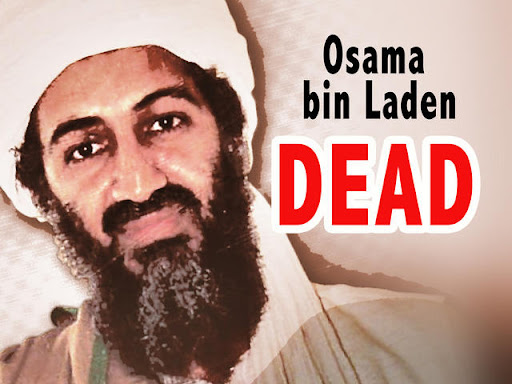
Al-Qaeda leader Osama Bin Laden has been killed by US forces in Pakistan, President Barack Obama has said.


Bin Laden was killed in a ground operation outside Islamabad based on US intelligence, the first lead for which emerged last August.

Mr Obama said after "a firefight", US forces took possession of his body.

Bin Laden was accused of being behind a number of atrocities, including the attacks on New York and Washington on 11 September 2001.

He was top of the US' "most wanted" list.

Mr Obama said it was "the most significant achievement to date in our nation's effort to defeat al-Qaeda".

The US has put its embassies around the world on alert, warning Americans of the possibility of al-Qaeda reprisal attacks for Bin Laden's killing.

Crowds gathered outside the White House in Washington DC,

Related Posts Plugin for WordPress, Blogger...
Twitter Delicious Facebook Digg Stumbleupon Favorites More